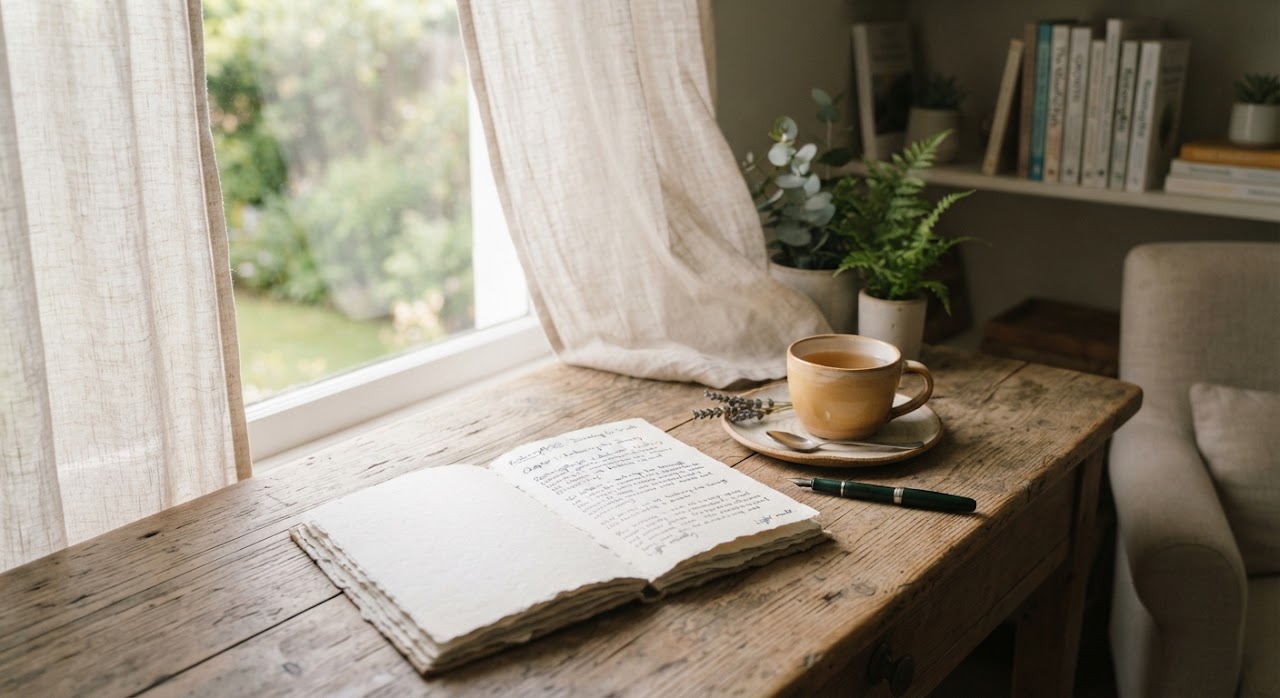
Your home is speaking to your nervous system all day long. The pile of unopened mail, the harsh overhead light, the chair that has quietly become a clothing rack: each one sends a small signal, and the signals accumulate. When people say they cannot relax at home, they are often not describing a personal failing. They are describing an environment that keeps asking things of them.
Curating a sanctuary space is not about achieving a minimalist showroom or buying a whole new aesthetic. It is the slower, kinder work of noticing what your surroundings do to your body and adjusting them so they support rest instead of quietly taxing it. You do not need a bigger home or a renovation budget. You need attention, and a willingness to make small changes that answer to how you actually live.
Begin With How a Room Feels, Not How It Looks
Walk into each room and pause at the doorway. Notice your shoulders, your jaw, your breath. Some spaces will soften you; others will produce a faint tightening you have probably learned to ignore. That tightening is information. Often it points to visual noise, unfinished tasks sitting in plain sight, or lighting that reads as alertness rather than ease.
Research in environmental psychology consistently links cluttered, high-stimulation spaces with elevated stress hormones and a nagging sense of being behind. The goal is not emptiness, though. It is coherence: a room where most of what you see either serves you or comforts you, and where the unfinished things have somewhere to rest out of view until you are ready for them.
Create One Anchor of Calm
You do not have to transform the whole home at once, and trying usually ends in an exhausted weekend and a half-empty donation box. Instead, choose a single corner and make it unmistakably restorative: a chair with a soft blanket, a lamp with warm light, a small table for tea, and nothing else that asks for your attention. One reliably calm square meter changes how the entire home feels, because your body learns there is always somewhere to land.
Protect this anchor gently. It is not a place for laptops, folded laundry, or difficult conversations. Over time, simply sitting there becomes a cue for your nervous system to downshift, the way a familiar path signals the body that it is almost home.
Let the Senses Vote
Restoration is sensory before it is visual. Sound, scent, texture, and light shape the emotional temperature of a room more than its furniture does. A home can be perfectly tidy and still feel brittle under cold light and hard surfaces. So instead of asking what a room needs, try asking what your senses need from the room.
A room becomes a refuge the moment it stops asking anything of you.
Here are a few starting points, each small enough to finish in an ordinary evening:
- Soften the light: swap one overhead bulb for a warm lamp placed at eye level or lower, and notice how the mood of the room changes after sunset.
- Contain the unfinished: give in-progress things one basket, drawer, or tray per room so they can exist without being permanently on display.
- Add one living element: a hardy plant, fresh stems in a jar, or even a bowl of smooth stones brings a quiet sense of life into the space.
- Choose a signature texture: keep one genuinely comforting textile, such as a wool throw or a linen cushion, somewhere your hands can always find it.
Sanctuary is not a style; it is a relationship between you and the place that holds you. Move slowly, change one thing at a time, and let your body tell you whether it worked. The home you already have contains enough raw material for the rest you need.